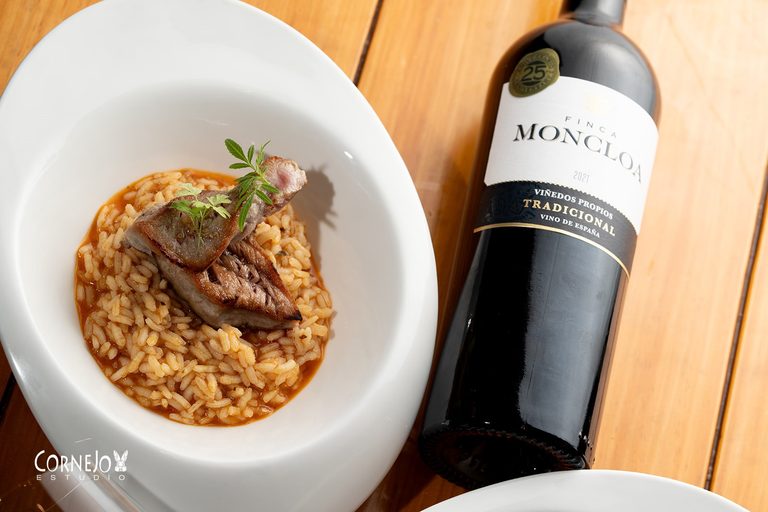
To speak of Jerez is to speak, above all, of wine. This is where one of the world’s most singular winemaking traditions was born, and understanding it means understanding much of the culture of the Jerez table.
A land, a climate and a grape that make it possible
The wines of Jerez hold their own Denominación de Origen (Designation of Origin), Jerez-Xérès-Sherry, one of the oldest in Spain. Their character comes from the combination of three factors: the sunny climate of southern Cádiz, the closeness of the sea and, above all, the albariza soil, a white, chalky earth that retains moisture and allows the vines to survive the driest summers.
The leading grape is Palomino, used to make the dry wines, while Pedro Ximénez and Moscatel are reserved for the sweet, fortified wines.
The styles: a world within Jerez wine
Fino and manzanilla, the lightest
These are the driest, palest and most delicate wines in the range. They age under a veil of flor (a layer of yeast that shields the wine from direct contact with air), which gives them their characteristic sharp, saline aroma. Manzanilla, in particular, can only be made in Sanlúcar de Barrameda, where the closeness of the sea lends it an even more iodine-like edge.
Amontillado, the wine of two lives
It begins life as a fino, but over time loses its veil of flor and begins an oxidative ageing process, in direct contact with air. The result is a darker, more complex wine with aromas of dried nuts, one that still carries something of the finesse of its origins.
Oloroso and Pedro Ximénez, the fullest-bodied
Oloroso is always aged oxidatively, without a veil of flor, which gives it a mahogany colour and a far more intense body. Pedro Ximénez, meanwhile, is a sweet, dense wine made from sun-dried grapes, perfect alongside desserts or even enjoyed on its own, as if it were one.
Wine as part of the table, not just the toast
In Jerez, wine is never seen as separate from food, but as another ingredient. A chilled fino pairs naturally with fried fish (pescaíto frito) or shrimp fritters (tortillitas de camarones), while an oloroso or a Pedro Ximénez can become the perfect companion to a hearty stew or a traditional dessert. This custom of pairing every dish with its own glass is, at heart, one of the clearest hallmarks of Jerez’s gastronomy.